
“Cardio protects your heart. Strength training protects your independence.”

Strength training after 60 is one of the most important — and most overlooked — components of healthy aging.
Walking is one of the best habits you can build after 60. It clears your head, keeps your joints mobile, supports your heart, and gets you outdoors. For millions of people, a daily walk is a cherished part of their routine — and rightly so.
But here’s what most fitness advice aimed at older adults gets wrong: they treat walking as the finish line, when it’s really just the starting point.
When it comes to preventing muscle loss, protecting your long-term independence, reducing your risk of a fall, and preserving the strength you need to live your life fully — walking alone is not enough.
After 60, your body doesn’t just need movement. It needs resistance. It needs challenge. It needs to be told, again and again, that your muscles are still required.
That’s exactly what strength training after 60 provides. And in this guide, we’ll break down why it matters so much, what the science says, and how you can start — safely, gradually, and without ever setting foot in a commercial gym.
What’s in This Guide
- What Happens to Muscle After 60
- Why Walking Isn’t Enough
- What Strength Training Actually Does for Your Body
- The Surprising Link Between Muscle and Longevity
- How Often Should You Train?
- Simple, Effective Exercises to Start Today
- How to Combine Strength Training and Walking
- Frequently Asked Questions
1. What Happens to Muscle After 60
To understand why strength training is so important after 60, you first need to understand what’s quietly happening inside your body — whether you’re active or not.
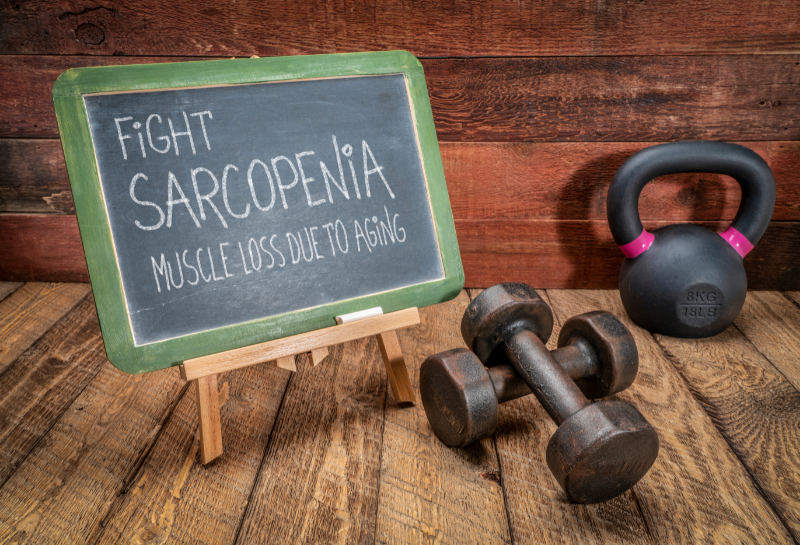
Starting in your 30s, you begin losing muscle mass at a slow but steady rate. By the time you reach your 60s, this process — called sarcopenia — has accelerated significantly. Researchers estimate that adults lose between 3 and 8 percent of their muscle mass per decade after age 30, with the rate speeding up after 60.
If you’d like a deeper breakdown of how muscle loss accelerates after 50 — including what sarcopenia really is and how to reverse it naturally — read our full guide on Why Most People Over 50 Lose Muscle — And How to Reverse It Naturally.
But here’s what makes it more complicated than just “losing muscle”: the type of muscle you lose matters enormously.
Fast-Twitch Fibers: The Ones That Matter Most for Safety
Your muscles contain two primary types of fibers: slow-twitch, which handle endurance activities like walking, and fast-twitch, which handle quick, powerful movements — like catching yourself when you slip, or standing up quickly from a chair.
After 60, fast-twitch fibers decline at a faster rate than slow-twitch fibers. This is a critical distinction. It means that even if you’re walking every day and feel reasonably fit, your ability to react quickly in an emergency — to grab a railing, regain your balance, or break a fall — may be quietly deteriorating.
Research published by the European Working Group on Sarcopenia in Older People confirms that muscle strength declines faster than muscle size. In other words, you might look similar on the outside while becoming meaningfully weaker on the inside.
What’s Actually Happening in Your Muscles
The changes aren’t just about quantity — they’re about quality and function:
- Muscle fibers shrink in size and lose contractile efficiency
- Fast-twitch fiber count drops, reducing power and reaction speed
- Neuromuscular connections weaken, slowing the signals between brain and muscle
- Connective tissue becomes less resilient, increasing injury risk
- Hormone levels — particularly testosterone and growth hormone — decline, reducing the body’s natural muscle-building signals
The bottom line is stark: muscle loss accelerates without a resistance stimulus. And walking — as valuable as it is — does not provide that stimulus in a meaningful way.
“You can walk every day and still be losing the muscle that keeps you independent.”
2. Why Walking Isn’t Enough
This is not a criticism of walking. Walking is genuinely wonderful. It’s free, it’s low-impact, it’s social, and it supports nearly every system in your body. If you’re walking regularly, keep walking. Never stop.
But understanding why walking falls short when it comes to preserving muscle will help you see why adding strength training isn’t optional — it’s essential.
Walking Is a Low-Resistance Activity
When you walk on a flat surface at a comfortable pace, your muscles are working, but not very hard. Your body has adapted to the movement pattern over decades. It’s efficient, which is great for cardiovascular health — but efficiency is the enemy of muscle development.
To maintain or build muscle, you need progressive resistance: a load that challenges your muscles beyond what they’re accustomed to, forcing them to adapt. Walking on flat ground doesn’t do this. Your leg muscles are doing what they’ve always done, at a level they’re very comfortable with.
What Walking Does Well
To give walking its full due, here’s what it genuinely excels at:
- Supporting cardiovascular health and reducing heart disease risk
- Improving blood sugar regulation and insulin sensitivity
- Maintaining joint mobility and reducing stiffness
- Elevating mood and reducing anxiety through endorphin release
- Improving cognitive function and reducing dementia risk
- Providing low-impact daily movement that keeps you active
These are not small things. Walking is a cornerstone of a healthy life. But notice what’s not on that list: maintaining muscle mass, preventing falls, building functional strength, or preserving independence. That’s where strength training steps in.
Endurance vs. Resilience
There’s a useful way to think about the difference between these two forms of exercise:
Walking trains endurance. Strength training trains resilience. After 60, resilience is what protects your independence.
Multiple studies comparing aerobic exercise (like walking) to resistance training in older adults have consistently found that resistance training produces superior outcomes for muscle mass, bone density, fall prevention, and functional independence. Walking keeps you moving. Strength training keeps you capable.
3. What Strength Training Actually Does for Your Body
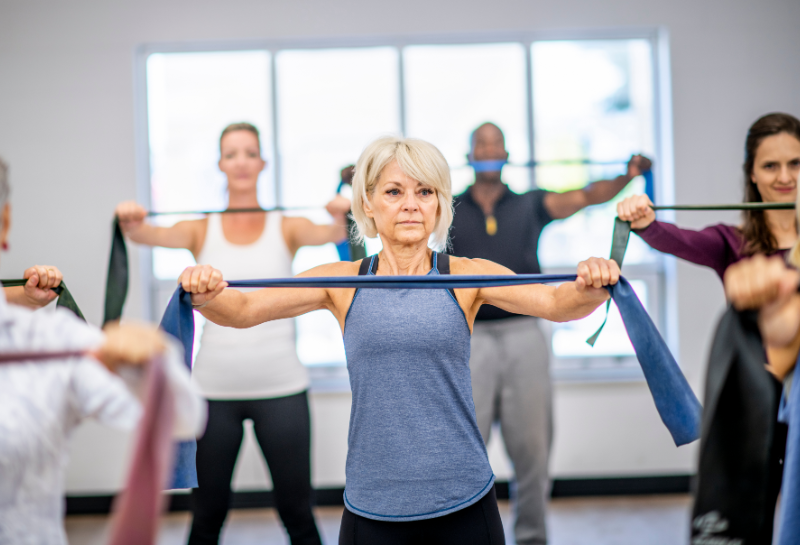
When you pick up a resistance band, push against a wall, or stand up from a chair without using your hands, something important happens inside your body. You send a signal:
“This muscle is still needed. Keep it. Strengthen it.”
That signal sets off a cascade of adaptations that walking simply doesn’t trigger.
The Physiological Response to Resistance
Here’s what happens in your body when you introduce consistent resistance training:
- Muscle protein synthesis increases: Muscle protein synthesis increases
Your body begins building new muscle proteins to repair and reinforce the fibers you’ve challenged.
Strength training provides the stimulus — but protein provides the raw materials. If you’re unsure how much protein you actually need to support muscle repair after 50, read our detailed breakdown of How Much Protein Do You Really Need After 50 to Maintain Muscle?
- Neuromuscular adaptation improves: Neuromuscular adaptation improves
Your brain gets better at recruiting muscle fibers quickly and efficiently — a critical factor in fall prevention.
- Motor unit recruitment expands: Motor unit recruitment expands
More muscle fibers become available to contract simultaneously, increasing strength without necessarily increasing size.
- Connective tissue strengthens: Connective tissue strengthens
Tendons and ligaments adapt to load, reducing injury risk and improving joint stability.
- Bone density increases or is maintained: Bone density increases or is maintained
Resistance training is one of the most effective non-pharmaceutical interventions for osteoporosis prevention.
What the Research Shows
The evidence base for resistance training in older adults is both deep and compelling:
A landmark study published in The New England Journal of Medicine demonstrated that even frail nursing home residents in their 80s and 90s were able to significantly increase their strength and functional mobility after a supervised resistance training program. These were not healthy, active adults — these were frail, institutionalized individuals. And they still responded.
Additional research has shown that resistance training in older adults improves balance, gait speed, reaction time, stair-climbing ability, and scores on functional independence measures. These aren’t just numbers on a page — they translate directly into the ability to live your life on your terms.
The Most Important Point
Age does not eliminate your body’s ability to adapt. It slows adaptation — but it does not stop it. Adults in their 70s, 80s, and even 90s can gain meaningful strength with progressive resistance training. The biology of adaptation doesn’t retire just because you’ve reached a certain age.
4. The Surprising Link Between Muscle and Longevity
Muscle is far more than a matter of appearance or athletic performance. Researchers have increasingly come to understand that skeletal muscle is a metabolic organ — one that plays a critical role in overall health, disease prevention, and length of life.
Muscle and Mortality
Higher muscle mass is independently associated with lower all-cause mortality. This means that across the full range of causes of death — heart disease, cancer, metabolic disease, infection — people with more muscle tend to live longer. The relationship holds even after controlling for factors like body weight, cardiovascular fitness, and lifestyle habits.
One major mechanism is metabolic: muscle tissue is the primary site of glucose uptake in the body. More muscle means better blood sugar regulation, lower insulin resistance, and reduced risk of type 2 diabetes — itself a significant driver of cardiovascular disease and mortality.
Muscle and Fall Prevention
Falls are the leading cause of injury-related death among adults over 65 in many countries. And most falls aren’t random accidents — they’re the predictable result of inadequate strength, balance, and reaction time.
Consider the ordinary movements that require genuine strength:
- Standing up from a low chair without using your arms
- Stepping up onto a curb or stair with control
- Catching yourself when you stumble on an uneven surface
- Carrying groceries up a flight of stairs
- Getting in and out of a car without holding the door
Each of these requires leg strength, core stability, and rapid neuromuscular response. Walking does not build these capacities. Strength training does.
Muscle and Independence
Perhaps the most emotionally resonant argument for strength training after 60 is this: muscle strength is one of the strongest predictors of functional independence in later life.
Cardio protects your heart. Strength training protects your independence.
The ability to live in your own home, move around freely, engage with your family, and manage your daily life without assistance — these things depend far more on muscular strength and balance than on cardiovascular fitness. Investing in strength training now is investing in your autonomy for decades to come.
5. How Often Should You Train?
One of the biggest misconceptions about strength training — especially among older adults — is that it requires long, grueling sessions at a gym. It doesn’t. The research is actually quite clear that moderate, consistent effort is what produces results.
The Evidence-Based Recommendation
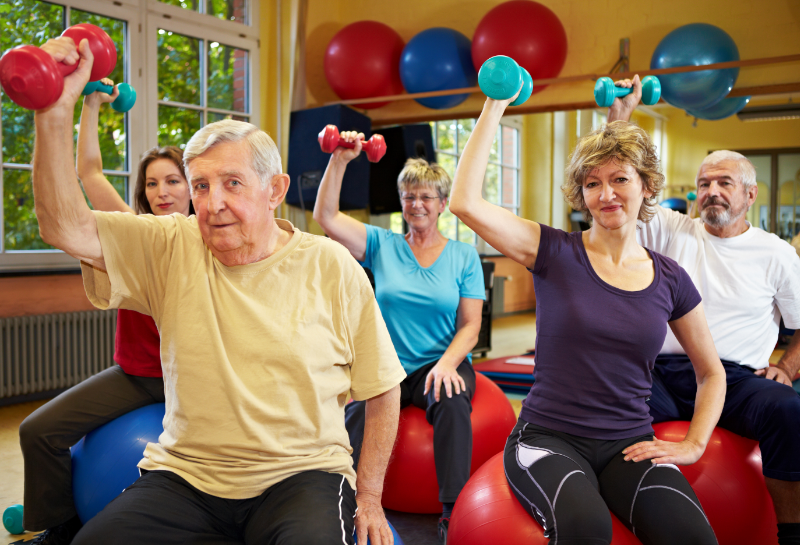
Most major health organizations, including the American College of Sports Medicine and the World Health Organization, recommend that older adults engage in resistance training at least 2 to 3 times per week. This is not an arbitrary guideline — it reflects the research on recovery, adaptation, and sustainability.
Session Structure
An effective strength training session for an older adult doesn’t need to be complex or exhausting. A well-designed 20 to 30 minute session can provide all the stimulus your muscles need to adapt and improve. Here’s what a session might look like:
- 5 minutes of gentle movement to warm up (marching in place, shoulder rolls, leg swings)
- 15 to 20 minutes of strength exercises targeting major muscle groups
- 5 minutes of gentle stretching and breathing to cool down
The Principle of Progressive Overload
The most important concept in any strength training program — at any age — is progressive overload. This simply means that over time, you gradually increase the challenge on your muscles. You might:
- Add one or two more repetitions to an exercise
- Use a slightly heavier weight or stiffer resistance band
- Slow down the movement to make it harder
- Reduce your rest time between sets
- Progress from a two-legged exercise to a one-legged version
You do not need to increase the challenge every session. Doing so every week or two is more than sufficient. The key is that the challenge never stays completely static for long periods.
You don’t need to lift heavy. You need to lift consistently — and a little harder over time.
6. Simple, Effective Exercises to Start Today
The best strength training program is one you’ll actually do. The following exercises are safe, effective, and require no gym membership or expensive equipment. They target the muscle groups most important for functional independence and fall prevention.
Exercise 1: Sit-to-Stand
This is arguably the single most important functional exercise for older adults. It directly trains the muscles you need to get out of a chair, off the toilet, or up from the floor.
How to do it: Sit in a sturdy chair with your feet hip-width apart. Lean slightly forward, then stand up without using your hands to push off. Slowly lower yourself back down until you just touch the seat, then stand again. Aim for 8 to 12 repetitions.
Progression: Slow the lowering phase down to 3 to 5 seconds. Eventually, try from a lower surface, or attempt it one leg at a time with support nearby.
Exercise 2: Wall Push-Up
Upper body pushing strength is essential for pushing open heavy doors, getting up from the floor, and protecting yourself in a fall.
How to do it: Stand facing a wall, about arm’s length away. Place your palms flat against the wall at shoulder height. Bend your elbows and bring your chest toward the wall, then push back. Aim for 10 to 15 repetitions.
Progression: Move your feet further from the wall to increase difficulty. Progress to a kitchen counter push-up, then eventually to a floor push-up from your knees.
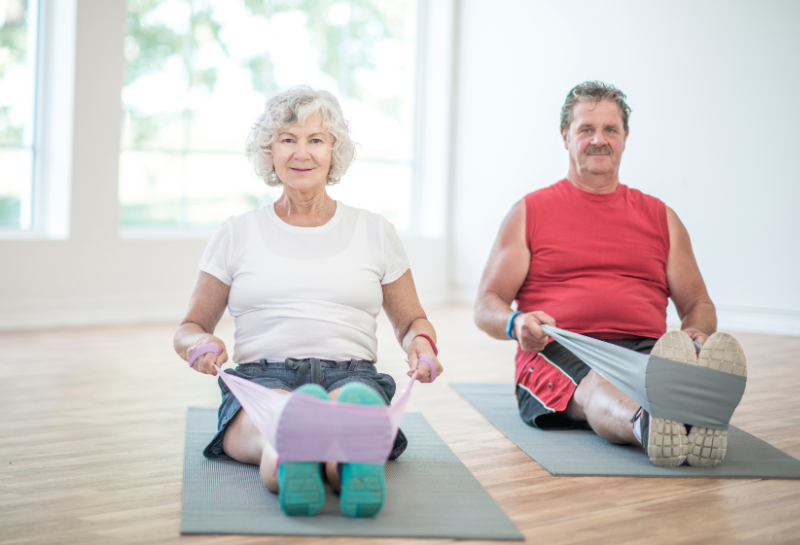
Exercise 3: Resistance Band Row
Back strength is often neglected, but it’s critical for posture, shoulder health, and the pulling movements of daily life — opening doors, lifting bags, getting dressed.
How to do it: Loop a resistance band around a door handle or sturdy post at waist height. Hold both ends and step back until there’s tension. Pull the band toward your torso, squeezing your shoulder blades together. Slowly return. Aim for 10 to 12 repetitions.
Progression: Use a stiffer band or step further back to increase resistance.
Exercise 4: Step-Up
This exercise trains single-leg strength and balance — critical for navigating stairs, stepping over obstacles, and maintaining stability on uneven ground.
How to do it: Stand in front of a low step or stair. Step up with one foot, bring the other foot up to meet it, then step back down. Hold a railing or wall for support as needed. Aim for 8 to 10 repetitions on each side.
Progression: Increase step height, or add light hand weights for additional challenge.
Exercise 5: Farmer’s Carry
Carrying things is one of the most common — and most demanding — activities of daily life. The farmer’s carry builds grip strength, core stability, and full-body coordination.
How to do it: Hold a light weight in each hand (water bottles work if you don’t have dumbbells). Walk slowly and steadily for 20 to 30 seconds, keeping your shoulders back and core gently engaged.
Progression: Increase the weight, the distance, or try carrying in one hand only to challenge your core.
Exercise 6: Standing Calf Raise
Calf strength is directly related to balance and the ability to control your movement while standing. This simple exercise is often overlooked but highly valuable.
How to do it: Stand behind a chair and hold the back lightly for support. Rise up onto the balls of your feet, hold for a moment, then slowly lower back down. Aim for 12 to 15 repetitions.
Progression: Try the movement on one foot at a time.
7. How to Combine Strength Training and Walking
To be absolutely clear: this guide is not arguing that you should replace walking with strength training. Both are valuable. The goal is to add strength training to your routine, not substitute it.
A Sample Weekly Structure
Here’s a simple, sustainable weekly schedule that incorporates both:
- Monday: 20-30 minute strength training session
- Tuesday: 30-45 minute walk
- Wednesday: Rest or gentle movement (yoga, stretching)
- Thursday: 20-30 minute strength training session
- Friday: 30-45 minute walk
- Saturday: 20-30 minute strength training session
- Sunday: Rest or leisurely walk
This is just one example. The specific days matter far less than the consistency. Two to three strength sessions per week, with walking on most other days, is an excellent foundation.
Start Small and Build
If you’re completely new to strength training, don’t try to do everything at once. Begin with one or two exercises per session, two days per week. Give your body time to adapt. Add exercises and sessions gradually over weeks and months.
Remember: ten focused minutes of strength training does more for muscle preservation than an extra mile of walking. You don’t need to overhaul your life — you just need to add a consistent challenge.
Small sessions, done consistently, protect the muscle you worked decades to build.

Final Thoughts
Walking keeps you moving. Strength training keeps you capable. After 60, capability matters more than the number of steps you count.
The goal of strength training in your later years isn’t to build an impressive physique or compete in any kind of athletic event. The goal is profoundly practical:
- To stand up from a chair without strain
- To climb stairs with confidence
- To carry your groceries without worry
- To catch yourself before a trip becomes a fall
- To move through your days without needing assistance
- To remain, as fully as possible, the author of your own life
None of this requires extreme effort, expensive equipment, or a gym membership. It requires consistency, a modest investment of time, and a willingness to challenge your body a little more than you did yesterday.
Age slows adaptation. It does not stop it. Your body, at 60, 70, or 80, still responds to resistance. It still builds strength. It still protects the muscle you ask it to use.
So ask it to use that muscle — twice a week, three times a week, with exercises as simple as standing up from a chair and sitting back down again. That’s not a small thing. Over months and years, it’s one of the most powerful investments you can make in your health, your independence, and your quality of life.
Live healthier. Live stronger. Live longer.
Frequently Asked Questions
Is walking useless after 60?
Not at all. Walking is genuinely excellent for your heart, your mood, your blood sugar, and your cognitive health. The point is not that walking is useless — it’s that walking alone is insufficient for maintaining muscle mass and functional strength. Combining walking with regular strength training gives you the full picture of physical health.
Can you really build muscle after 70?
Yes — and the research is quite clear on this. Adults in their 70s, 80s, and even 90s can increase both strength and lean muscle mass with progressive resistance training. The rate of adaptation is slower than in younger adults, and recovery may take longer, but the capacity for improvement does not disappear with age.
Do I need a gym or special equipment?
No. Bodyweight exercises like sit-to-stands, wall push-ups, and step-ups require no equipment at all. A set of resistance bands — available for under twenty dollars — opens up a wide range of additional exercises. Light dumbbells add further variety. A gym can be useful for variety and guidance, but it is by no means necessary for meaningful strength gains.
How long before I notice results?
Most people notice improvements in strength and ease of movement within four to six weeks of consistent training. You may feel more stable when walking, find it easier to get up from chairs, or notice that tasks that previously tired you feel more manageable. These functional gains often appear before any visible changes in muscle appearance.
Is strength training safe for older adults?
When performed with appropriate form and sensible progression — starting light, moving slowly, and increasing challenge gradually — strength training is considered safe and highly beneficial for most older adults. It is far safer, from a fall and injury perspective, than the alternative of growing progressively weaker.
If you have specific medical conditions — particularly cardiovascular disease, osteoporosis, recent joint replacement, or neurological conditions — consult your healthcare provider before beginning. A certified fitness professional with experience working with older adults can also provide valuable guidance on form and program design.
What if I’ve never exercised in my life?
Then you have more to gain than almost anyone. The research consistently shows that the greatest improvements from exercise occur in those who were previously inactive. Starting at 60, 70, or later with a consistent strength training routine can produce remarkable improvements in strength, function, and quality of life. It is never too late to begin.
This article is for informational purposes only and does not constitute medical advice. Please consult your healthcare provider before beginning any new exercise program.

